
White Shark Siblings Discovered: Landmark DNA Study Challenges Long-Held Beliefs About the Ocean's Most Iconic Predator
What if some of the Atlantic’s most famous white sharks aren’t just following the same migration routes—but are actually family? For one well-known OCEARCH shark, preliminary DNA findings have revealed an unexpected family connection—and raised even bigger questions.
First-of-its-kind Western North Atlantic study uncovers close family relationships among white sharks, opening an extraordinary new chapter in understanding shark migration, behavior, and conservation.
JACKSONVILLE, Fla. — For generations, white sharks have been viewed as the ocean’s ultimate solitary predators—powerful animals roaming thousands of miles seemingly alone.
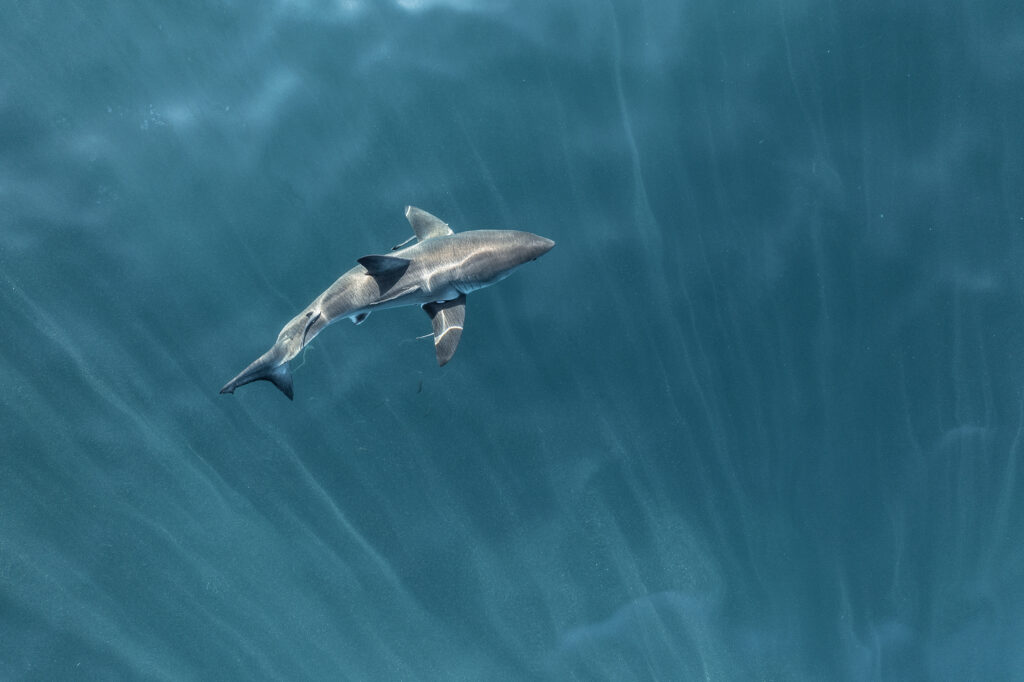
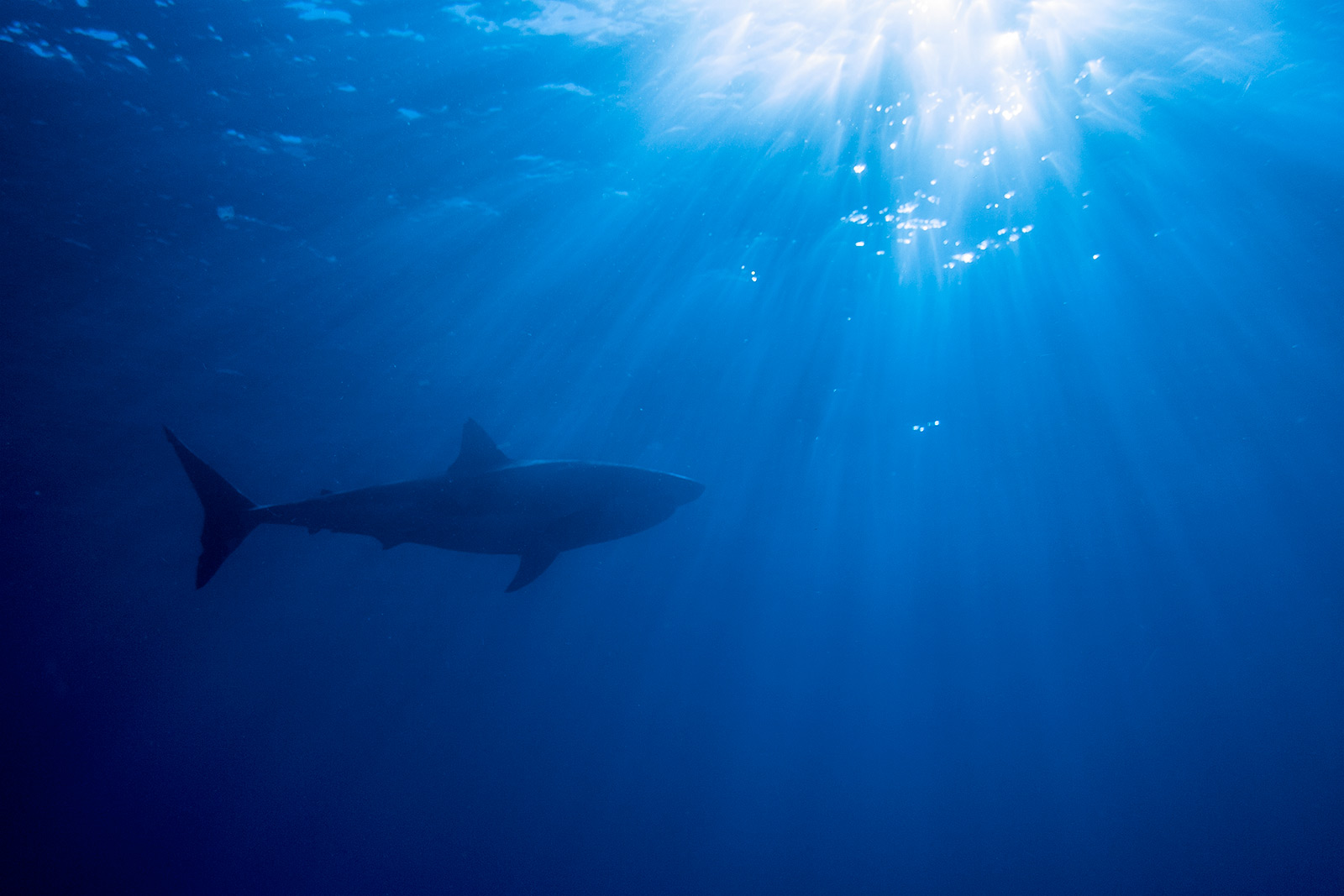
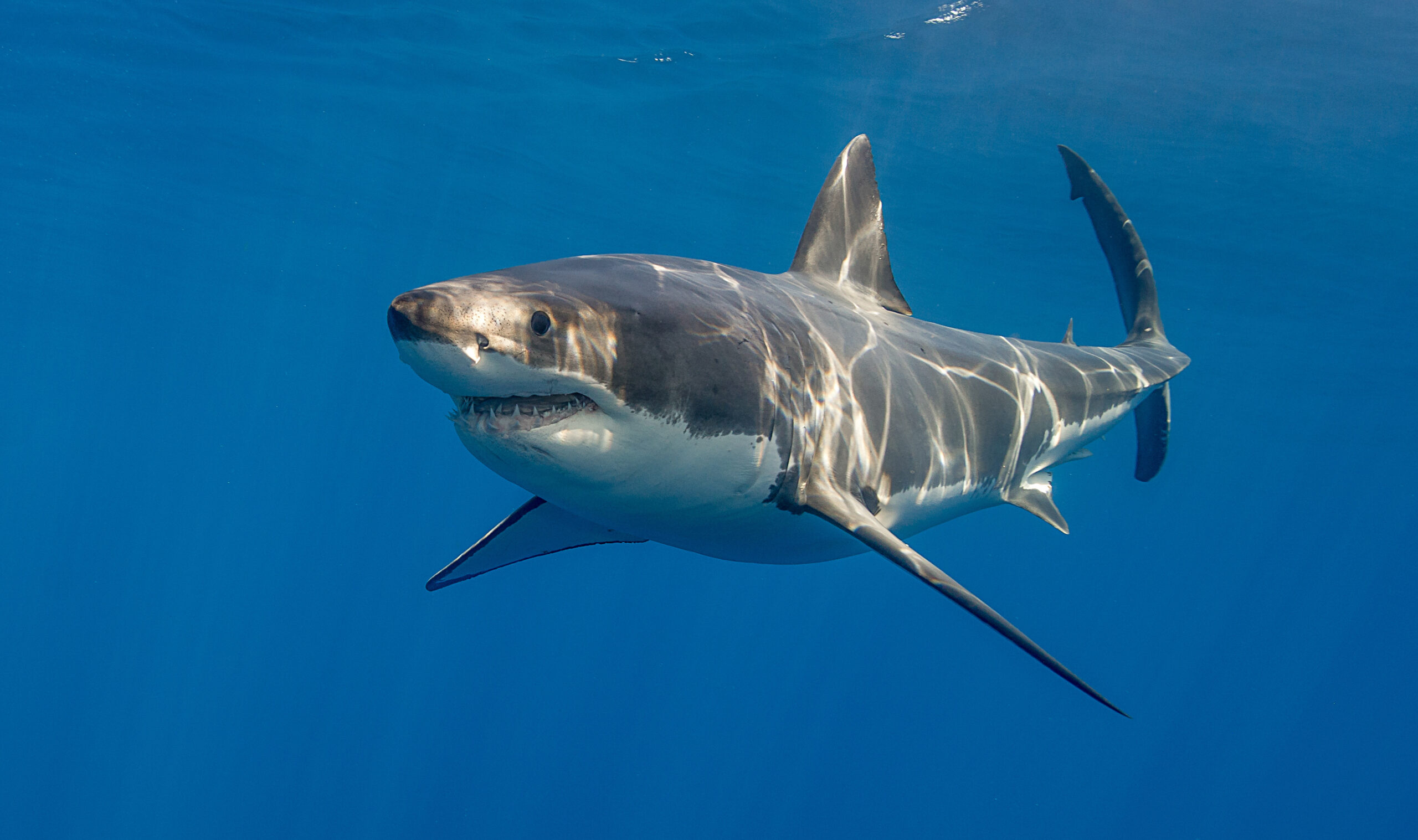
White Shark Swimming Around The M/V OCEARCH Ship During Expedition in the Western North Atlantic
A groundbreaking new genomics study is now revealing there may be much more to their story.
In what is believed to be the first genomic kinship study of Western North Atlantic white sharks, researchers have identified evidence overwhelmingly consistent with multiple close family relationships—including three pairs of full siblings and seven likely half-sibling pairs—uncovering hidden family connections and raising a fascinating new question: could related white sharks share similarities in how they use the ocean?
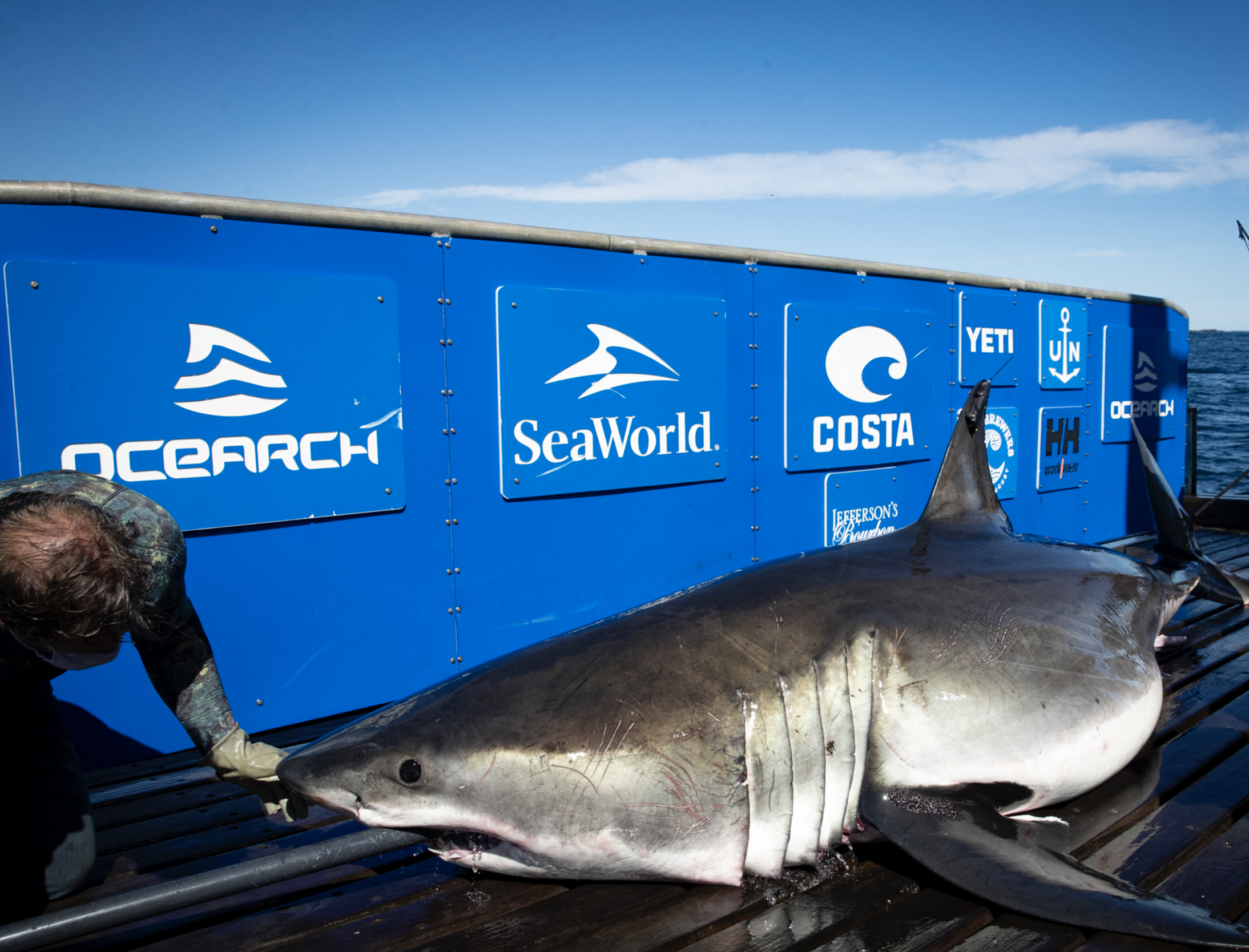
The collaborative research, conducted using genetic samples collected by OCEARCH and collaborating scientists, marks the beginning of an entirely new chapter in understanding white shark biology and ecology. By combining genomic analysis with OCEARCH’s unparalleled long-term satellite tracking dataset, scientists can now begin investigating whether family relationships help explain why white sharks return to many of the same critical habitats year after year.
Rather than simply asking where white sharks go, scientists can now begin exploring an entirely new question:
Could family relationships help explain how they use the ocean?
“This research changes the questions we can ask,” said Chris Fischer, Founder and Expedition Leader of OCEARCH. “For most people, white sharks are the ultimate lone predator. But every expedition reminds us the ocean is more complex than we imagine. For years, OCEARCH has helped reveal where white sharks travel across the Atlantic. Now we’re beginning to understand the families behind those journeys. Every new discovery brings us closer to understanding how these remarkable animals live, reproduce, and survive—and that knowledge is essential to returning our world’s oceans to balance and abundance.”
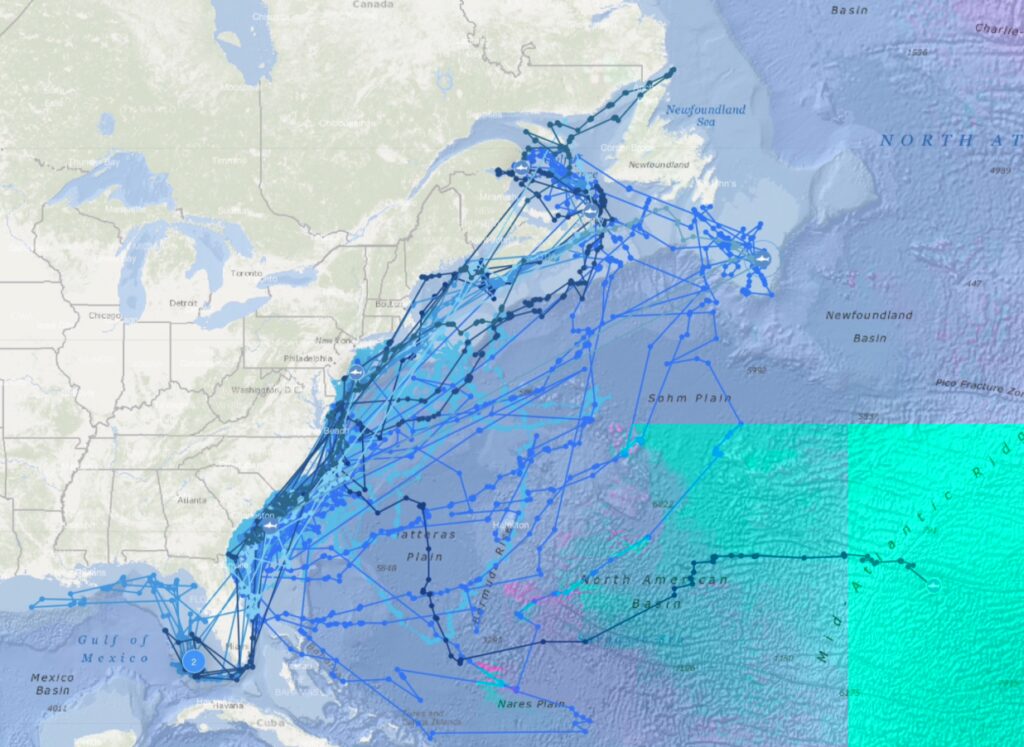
Western North Atlantic White Shark Tracks from the free OCEARCH Global Shark Tracker™
Among the study’s most compelling findings, researchers identified one pair of full siblings estimated to have originated from the same litter, while two additional full sibling pairs were estimated to have been born approximately five and nineteen years apart, based on estimated birth years derived from growth models. The genetic evidence is overwhelmingly consistent with these individuals being full siblings, with additional genomic sequencing planned to further strengthen the findings.
Jekyll's Family Connection
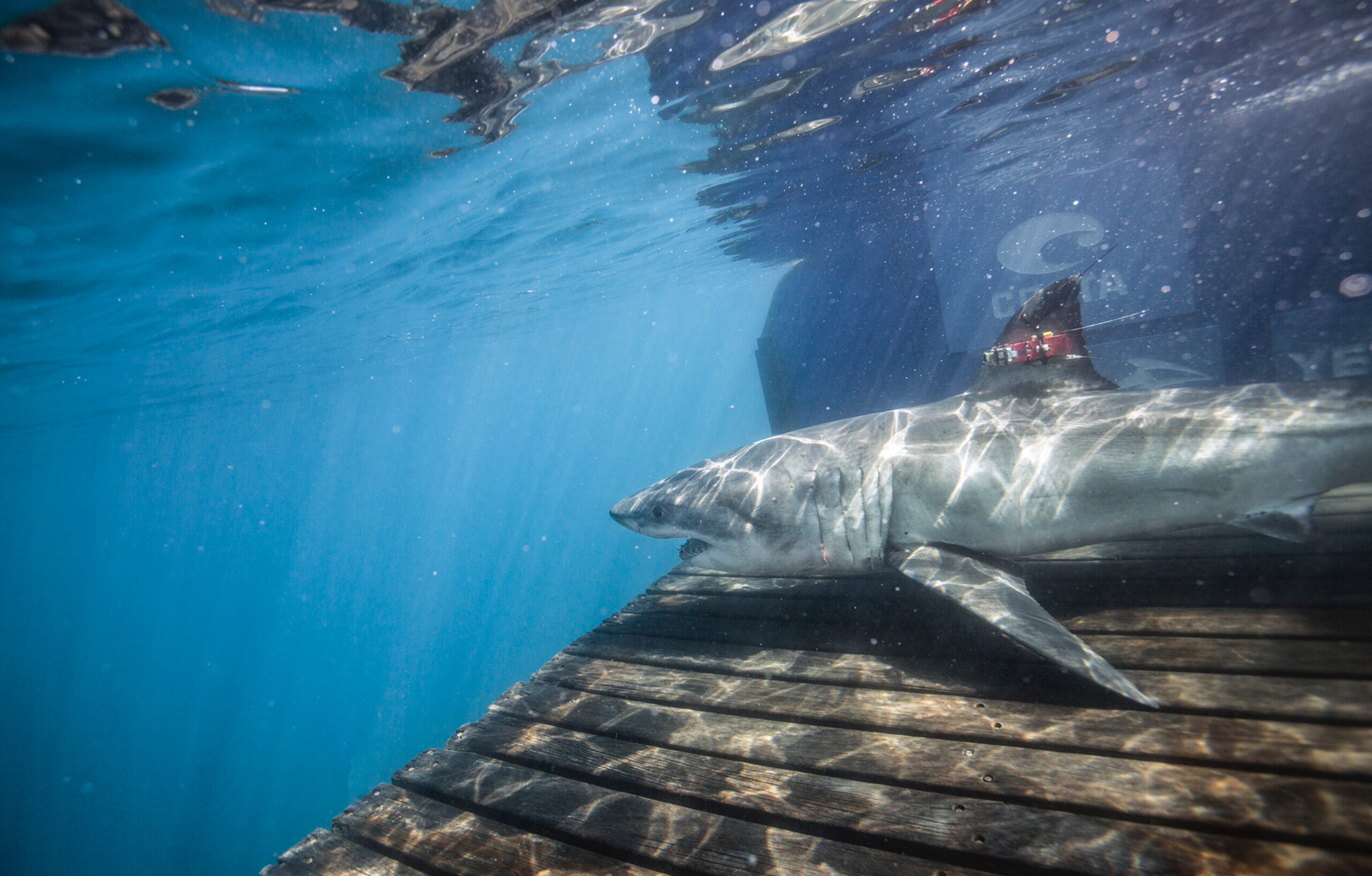
Among the sharks identified in the preliminary findings is Jekyll, a male white shark tagged by OCEARCH in 2022, who was found to have a sibling relationship with Olympia, a female white shark also tagged and tracked by OCEARCH in 2021.
The discovery adds an unexpected chapter to Jekyll’s story. Last year, scientists noticed that Jekyll and another young white shark, Simon, were making remarkably similar migrations along the Atlantic coast. Their nearly identical movements raised an intriguing question: Could they be related?
While the preliminary genetic analysis did not identify Simon as Jekyll’s sibling, it revealed something perhaps even more compelling: Jekyll does appear to have a sibling among OCEARCH’s tagged sharks—Olympia.
That unexpected finding illustrates exactly why scientists are now digging deeper. By connecting genetic relationships with years of satellite tracking data, researchers can begin examining whether related white sharks share similar patterns of migration and habitat use—and, if so, what factors may be driving those similarities, including genetics, environmental conditions, or individual experience.
Researchers also found that each of the full sibling pairs had been sampled in similar seasonal habitats—one sibling in the southeastern United States during winter or spring and the other in New England or New York during summer or fall.
Importantly, these preliminary results do not conclude that related sharks intentionally travel together, recognize one another, or inherit migration routes. Instead, they establish the scientific foundation to investigate whether family relationships influence habitat use and migration—or whether those similarities occurred by chance.
“This study is really the beginning, not the end,” said Dr. David Portnoy, an OCEARCH collaborating scientist and principal investigator of the study conducted at Texas A&M University-Corpus Christi. “We’ve identified close family relationships among Western North Atlantic white sharks, but we’ve only scratched the surface of what those relationships may tell us. By integrating genomics with years of satellite tracking data, we can now begin exploring whether related sharks share similar patterns of habitat use or migration. Those are exciting scientific questions, but they’ll require additional research before we understand exactly what patterns exist and why.”
One Population, Thousands of Miles
The study also found no detectable genetic population structure across sampled sharks from South Carolina and Georgia through New England and Nova Scotia, indicating that white sharks throughout the Western North Atlantic function as one interconnected population. Together with nearly two decades of OCEARCH satellite tracking, these preliminary findings reinforce what researchers have long observed—that the Western North Atlantic white shark population undertakes extensive seasonal migrations across a range that extends from the Gulf of Mexico to Atlantic Canada. The interim findings underscore the importance of conserving critical habitats throughout this entire interconnected range, as these highly migratory animals routinely cross state, provincial, and international boundaries.
“A couple years ago, OCEARCH tracked two young white sharks, Simon and Jekyll, making remarkably similar journeys along the Atlantic coast,” said Dr. Bob Hueter, Senior Science Advisor for OCEARCH. “Their movements raised an intriguing scientific question: could they actually be related? The genetics gave us an unexpected answer. Simon wasn’t identified as Jekyll’s sibling—but another OCEARCH-tagged white shark, Olympia, was. So Jekyll and Olympia are brother and sister, born five years apart! That’s the beauty of science: you follow an observation, ask a question, and sometimes the answer leads you somewhere you never expected. Now we have an entirely new set of questions to explore about family relationships, movement and habitat use in white sharks.”
“Discovering close family relationships among white sharks gives us an entirely new lens through which to understand their ecology,” said John Tyminski, Senior Data Scientist for OCEARCH. “Every shark we study helps answer one question while revealing several more. As we continue integrating genetics with long-term movement data, we’ll gain an even deeper understanding of how these remarkable animals use the ocean throughout their lives.”
The findings also raise an important question about the size of the white shark population in the Western North Atlantic. Finding multiple full- and half-sibling pairs within a relatively small sample—including one pair of full siblings with the same mother and father but estimated to have been born approximately 19 years apart—could suggest a relatively small population. If supported by further analysis, this finding could have significant implications for conservation policies aimed at rebuilding the Western North Atlantic white shark population.
“Finding so many close relatives shows how valuable every new sample can be. Additional sampling could reveal more family connections and provide a much clearer picture,” said Dr. Dominic Swift, a research scientist working on the project at TAMU-CC.
The Discoveries Are Only Beginning
For generations, white sharks have been portrayed as solitary predators roaming the ocean alone. While they are not social animals in the way dolphins or wolves are, this research suggests their lives may be connected through family relationships in ways scientists are only beginning to uncover. By identifying these close genetic relationships, researchers have opened an entirely new window into the hidden lives of one of the ocean’s most iconic species—and the discoveries are only beginning.
For OCEARCH, the findings represent another milestone in its mission to transform our understanding of white sharks and the oceans they help sustain. The organization has spent nearly two decades building the world’s largest open-access database of white shark movement and biological information. This latest research expands that mission from documenting where sharks travel to exploring how family relationships may shape their lives across generations.
These preliminary, thought-provoking findings are inspiring researchers to dig deeper through expanded genomic analyses and integration with years of satellite tracking data, with the goal of submitting the full study for peer-reviewed publication. Jekyll and Olympia represent one of the OCEARCH-tagged family connections emerging from this research, with additional relationships and insights expected as the analyses continue.
BE A PART OF THE MISSION
Support the Science Behind the Story!
Your donation helps fund critical shark research uncovering the hidden family connections beneath the waves!