
Countdown to Earth Day with the 9 Global White Shark Populations
Earth Day reminds us that protecting our planet means protecting the 71% of it covered by ocean and few species reflect ocean health as clearly as the white shark. As apex predators, white sharks help keep marine food webs in balance, support biodiversity, and reveal the overall condition of our seas.
In the lead-up to Earth Day on April 22nd, we’re spotlighting 9 key white shark populations worldwide to show why they matter, what science is uncovering about them, and how their future is intertwined with the future of our blue planet.
Listed as Vulnerable on the IUCN Red List, and facing even higher risk in some regions, white sharks need informed action. By tracking their movements, life stages, and critical habitats, we’re generating the science needed to better protect both sharks and the ocean that sustains life on Earth.
Support Our Sharks, Support Our Oceans This Earth Day
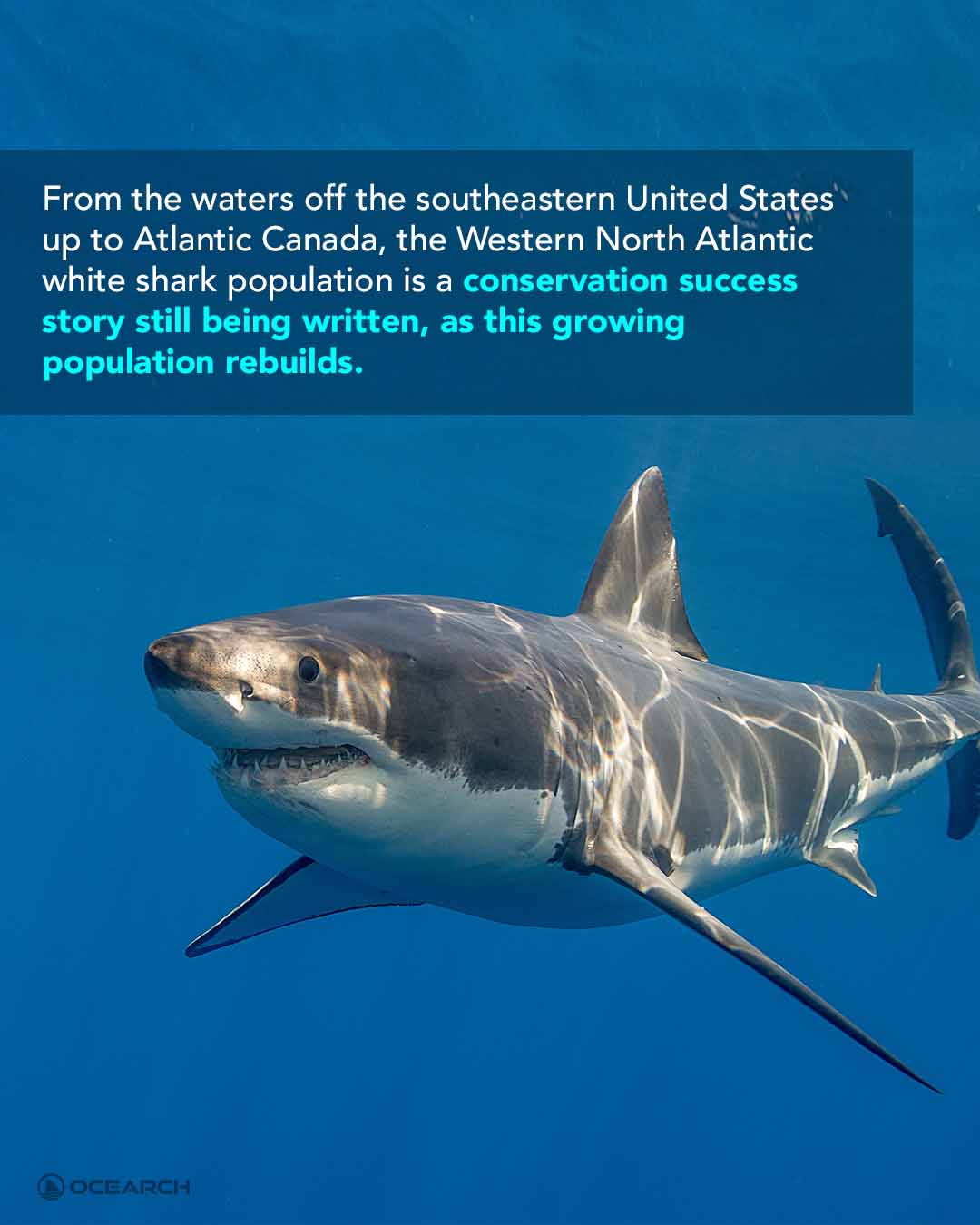
Western North Atlantic White Shark Population
Once heavily depleted by as much as 80% due to overfishing, this population is showing signs of recovery thanks to protections and better management, but it remains vulnerable.
OCEARCH has helped reveal:
– A critical nursery area off the U.S. Northeast, where young white sharks grow and feed.
– Seasonal migrations between coastal feeding grounds and offshore habitats from Atlantic Canada all the way down to the Gulf of Mexico.
– This population overlaps with dense human use areas, from busy coasts to key fisheries.
Why does this matter for Earth Day?
Signs of recovering apex predators is an indicator that ecosystem protections are beginning to work. By returning white sharks here, we support healthier fish populations, more resilient food webs, and a stronger Atlantic Ocean in the face of climate change.
Mediterranean White Shark Population
In these waters, white sharks face:
– Intense fishing pressure and bycatch over the last 3-4 decades, resulting in this population now Critically Endangered according to IUCN Red List Criteria.
– Heavy shipping traffic and pollution, compromising white shark habitat.
– Rapidly warming seas that shift prey and habitat for the white shark in the Mediterranean Sea.
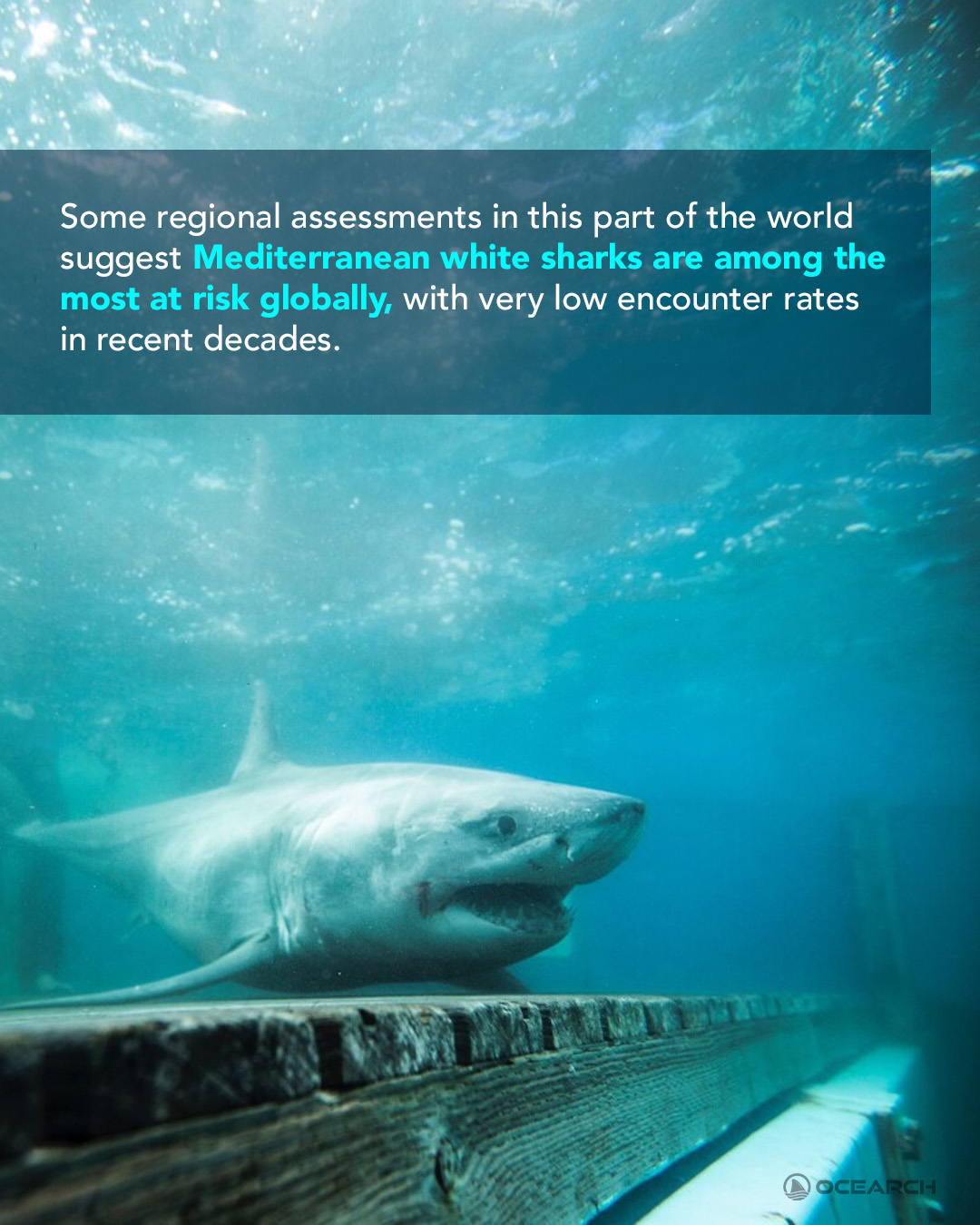
Why does this matter for Earth Day?
The Mediterranean white shark population shows how quickly human activity can erode marine biodiversity and how urgently we need science-based management and pollution reduction. Protecting apex predators here is part of a larger effort to return our oceans to balance and abundance in one of the most historically rich, yet heavily impacted, marine regions on Earth. With 22 nations sharing the Mediterranean coast, conservation efforts here are challenged by the enormous socio-political complexity of the region.
Southern African White Shark Population
Research is focused on:
– Changes in distribution, possibly linked to prey movements and climate.
– Interactions with expanding coastal development and fisheries.
– The role of Southern African white sharks in shaping rich coastal ecosystems.
– The relationships among Southern African white sharks and other predator species in the region, such as orcas.
– The effects of ecotourism on the presence and health of white sharks in Southern Africa.
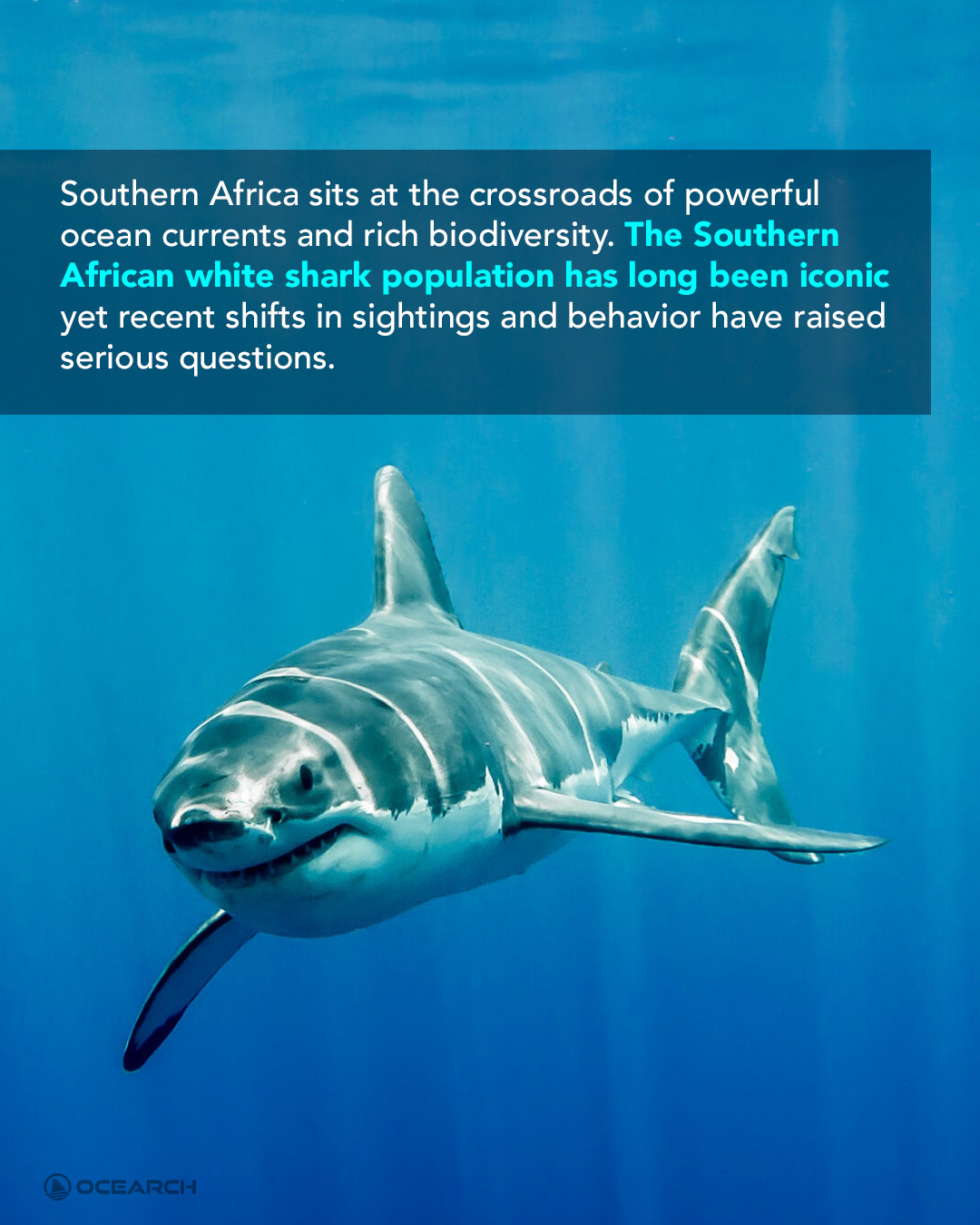
Why does this matter for Earth Day?
Southern Africa is a living laboratory for how climate, prey dynamics, and human activity collide. Understanding what’s happening to white sharks here helps us predict and manage similar changes in other parts of the world, strengthening Earth’s resilience in a warming ocean.
Western North Pacific White Shark Population
White sharks in the Western North Pacific population range from Russia and Korea down through Japan, China, Taiwan, Vietnam, the Philippines, and Malaysia. Unlike better‑studied populations, most of what we know here comes from fisheries captures and confirmed sightings, with data limited to samples from sharks that have already died.
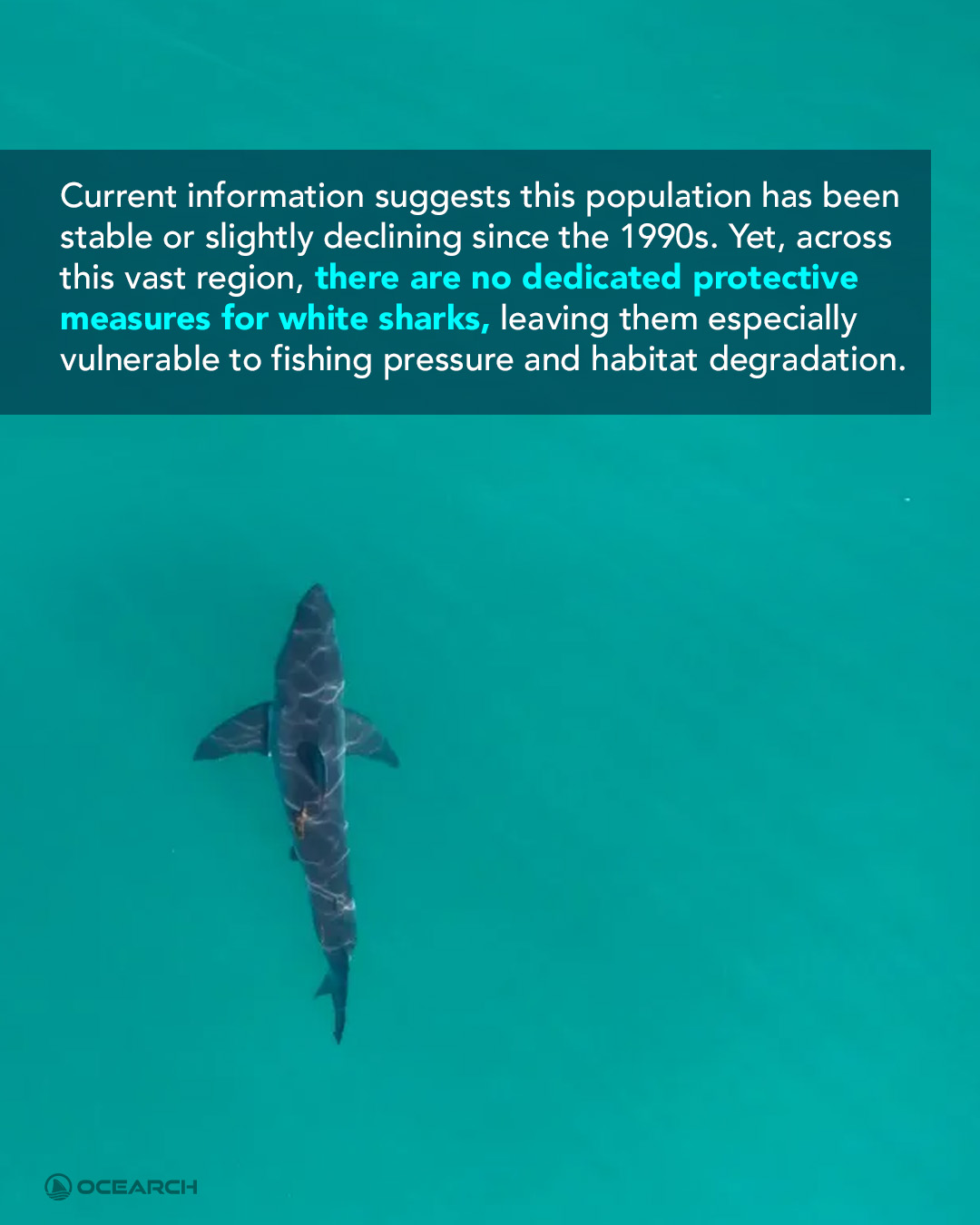
Why does this matter for Earth Day?
The Western North Pacific highlights a core Earth Day challenge: we can’t safeguard what we don’t fully understand. In one of the busiest ocean basins on the planet, filling critical data gaps and advancing science‑based protections for white sharks is urgent, not just for this species, but for the health and balance of the entire marine ecosystem they help regulate.
Eastern Australia / New Zealand and Southwest Australian White Shark Populations
White sharks in the Australasian region form two closely linked populations: Eastern Australia & New Zealand and Southwest Australian white shark populations. Together, they range from Tasmania up to southern Queensland, across to New Zealand, and from western Victoria to northwestern Western Australia, with some overlap between the two groups.
In Southwest Australia, protections introduced in the 1990s have helped stabilize numbers, but there is still no clear evidence of recovery. Studies have shown a lack of genetic structure between white sharks from eastern and southern Australia.
These results also raise concerns for the conservation of Australian white sharks highlighting risks of potential inbreeding, and reductions in population fitness and resilience.
Modern non‑lethal sampling, tagging, and long‑term monitoring have made these some of the best‑studied white shark populations on Earth, yet:
– Historical catch records and genetics show no sign of rebound in the east.
– The southwest appears stable but not recovering, with low genetic diversity.
– Continued tracking is essential to understand whether true recovery is even possible.
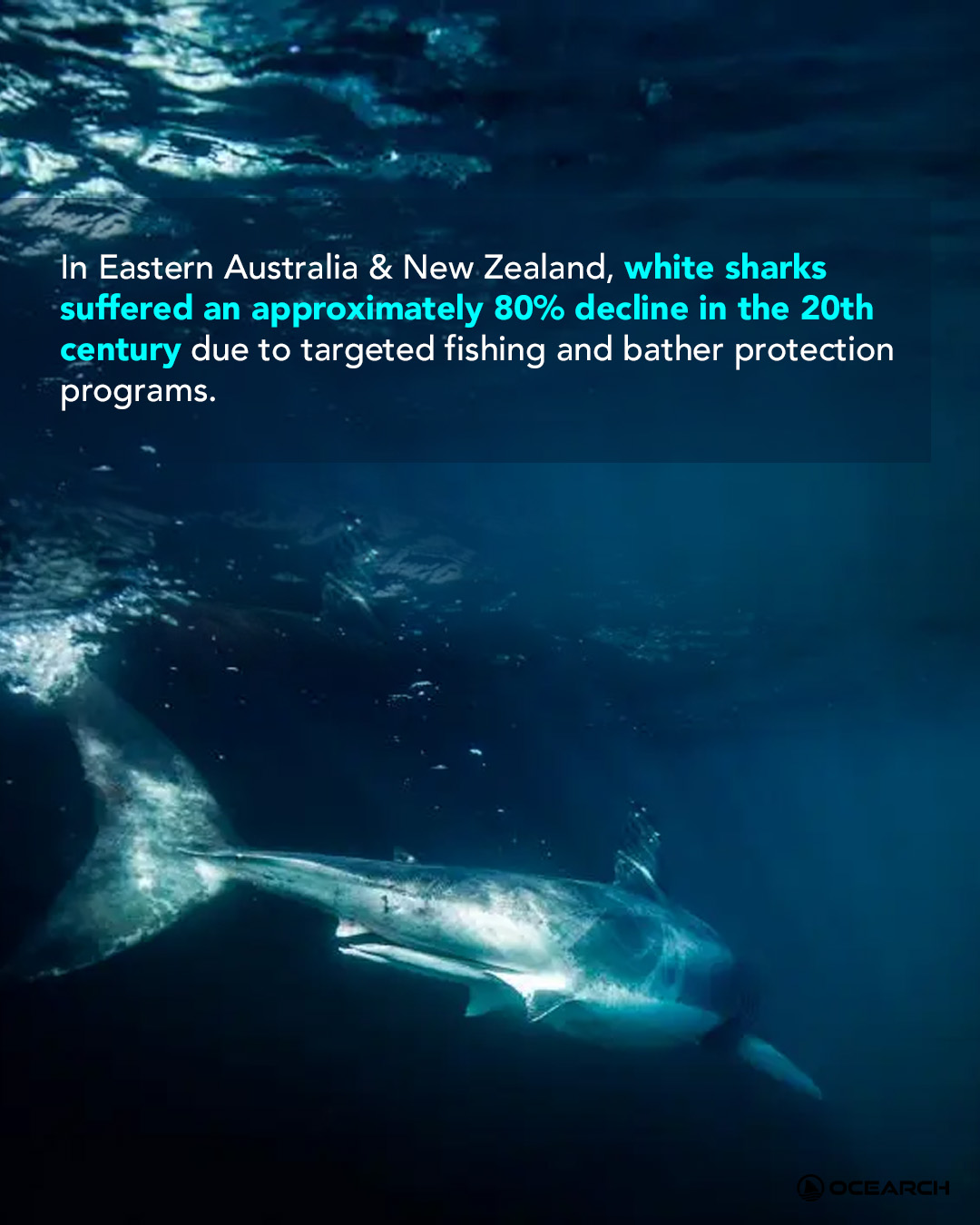
Why does this matter for Earth Day?
Australasia’s white sharks show that legal protection is only the first step. Deep, long‑lasting human impacts can leave populations depleted and genetically fragile for decades. On Earth Day, these sharks remind us that restoration requires sustained science, smarter coastal management, and long‑term commitment to helping damaged ecosystems truly recover, not just survive.
Eastern North Pacific White Shark Population
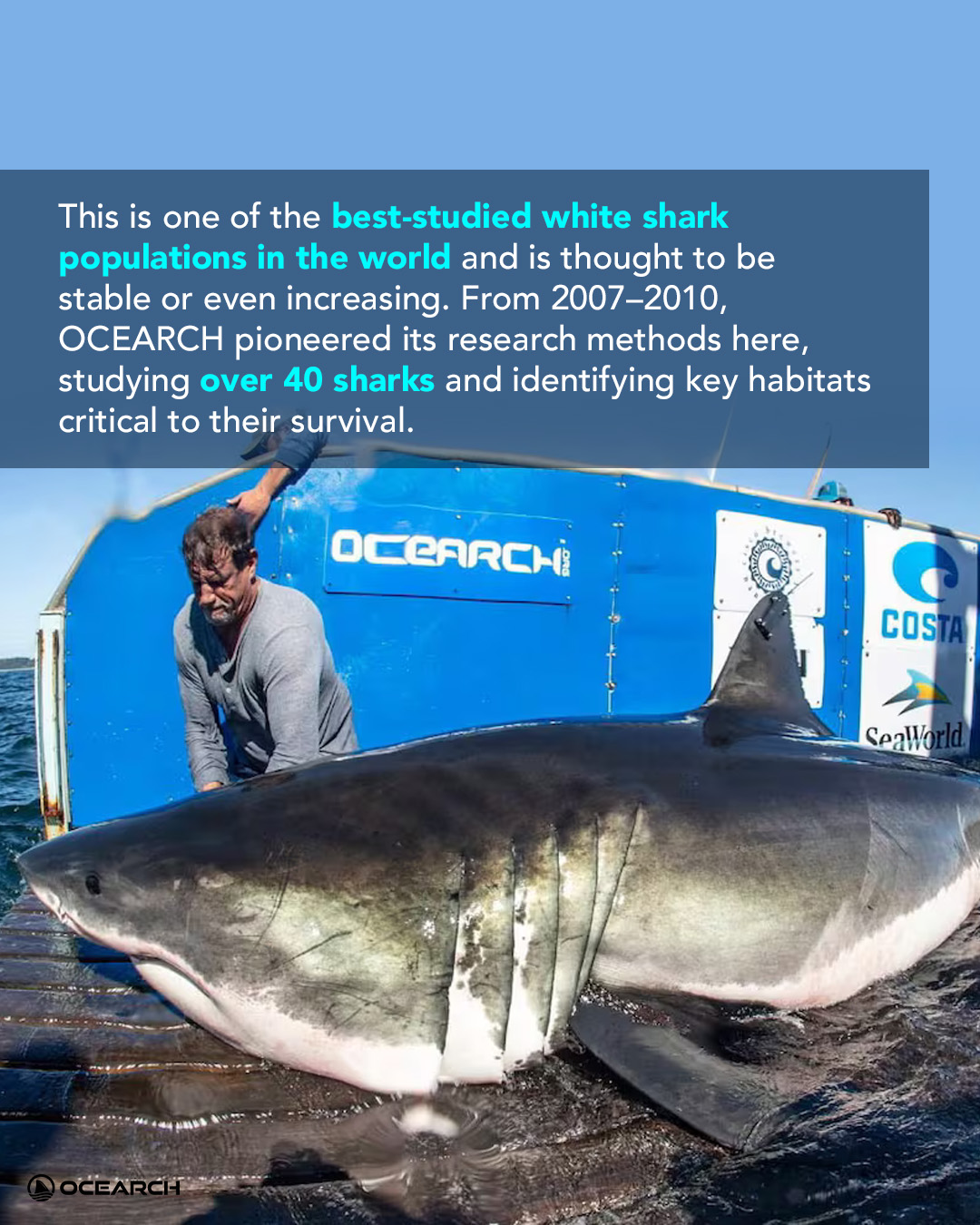
White sharks in the Eastern North Pacific range from Alaska down to Mexico and west to Hawaii. Their core habitats include the California and Mexican coasts, the waters around Hawaii, and a seasonal offshore foraging zone known as the “White Shark Café” (also known as the Shared Offshore Foraging Area, SOFA) in the open Eastern Pacific.
Why does this matter for Earth Day?
The Eastern North Pacific population shows what’s possible when long‑term science, policy, and public awareness come together. Protecting these sharks and the coastal and offshore habitats they depend on demonstrates how informed, sustained action can support both ocean health and biodiversity on a changing planet.
South American Pacific & Atlantic White Shark Populations
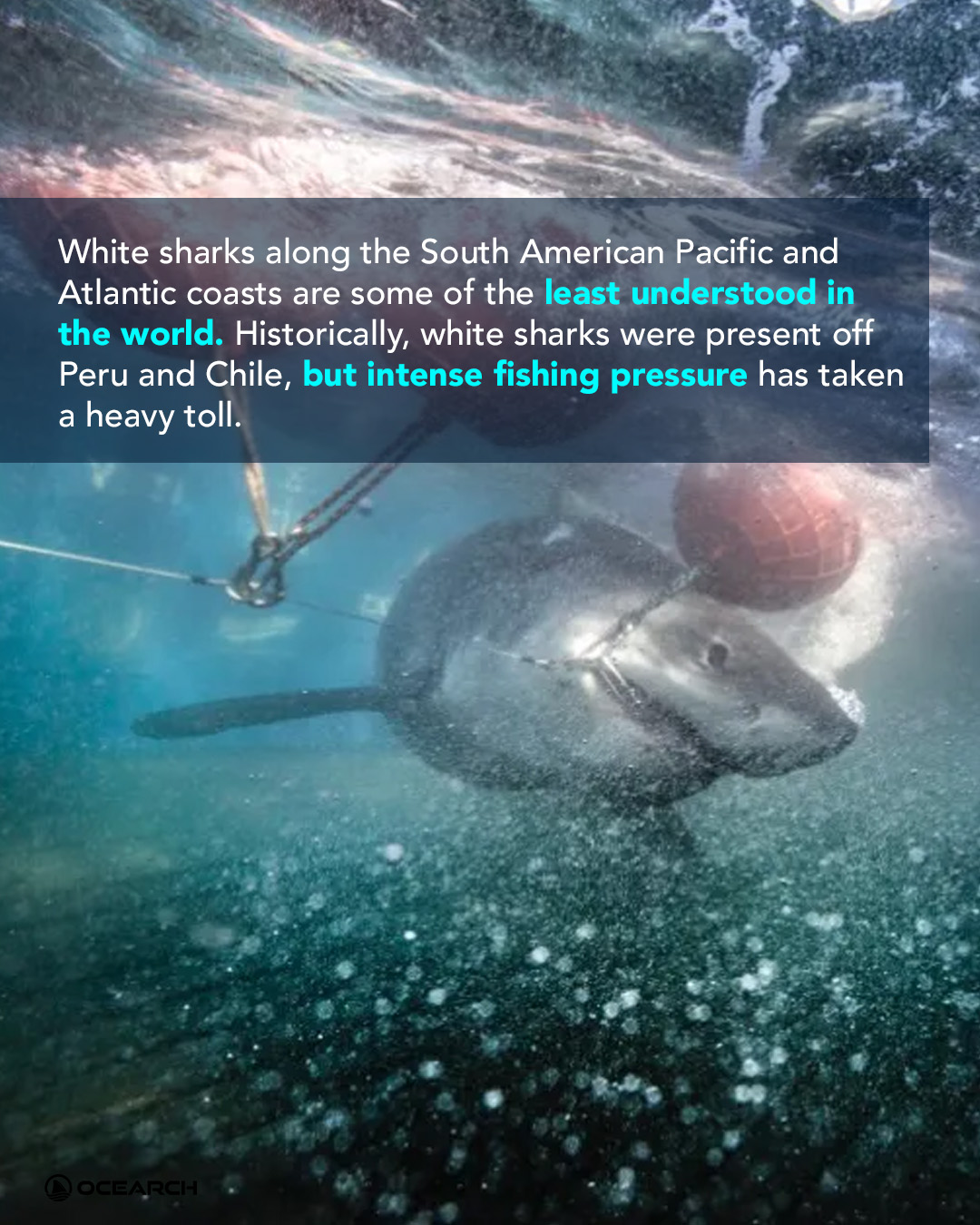
In 2014, OCEARCH explored the Juan Fernandez Archipelago off Chile and found only one shortfin mako and six blue sharks — no white sharks were captured or observed during this expedition.
On the Atlantic side, most of what we know comes from occasional sightings and fisheries captures off Brazil, Uruguay, and Argentina. It’s still unclear whether these records represent a small, scattered presence or an under‑recognized indigenous population. In 2014, OCEARCH partnered with regional scientists in Brazil, studying six tiger sharks and building critical relationships and capacity for future white shark research in the South Atlantic.
In both the Pacific and Atlantic, OCEARCH has worked with local leaders and scientists to:
– Highlight the urgent need to combat illegal, unreported, and unregulated (IUU) fishing.
– Lay the groundwork for ongoing shark research and conservation.
– Begin filling major data gaps on white shark presence, movements, and threats.
Why does this matter for Earth Day?
South America’s Pacific and Atlantic coasts show what happens when we wait too long to act and how essential it is to combine science, enforcement, and community leadership. On Earth Day, these regions remind us that protecting our planet means paying special attention to places where data are scarce, threats are high, and the window to safeguard species like white sharks may be closing fast.
How You Can Take Action This Earth Day?
White sharks are more than iconic symbols of our oceans, they are practical indicators of whether Earth’s marine ecosystems are healthy enough to support life, including our own. Here’s how you can help:
Follow the Tracks: Download the OCEARCH Global Shark Tracker app to follow individual sharks and learn more about their migratory patterns.
Support Science: Share OCEARCH findings, support shark research, and help amplify the importance of long-term data for conservation.
Advocate for Healthy Oceans: Support policies that reduce overfishing and bycatch, protect critical habitats, and address climate change.
Live a Shark-Friendly Lifestyle: Reduce plastic use, choose sustainable seafood, and lower your carbon footprint, small daily actions scale up to global impact.